If you are thinking of investing in a franchise, please make sure you read this blog BEFORE signing a Franchise Agreement as it contains some incredibly useful information to help ensure you reduce the risk of your investment. Due Diligence is the most critical phase in any franchisee’s journey because if you chose badly it could be disastrous for both your wallet and your mental health so please do not rush into the opportunity and instead take your time to complete your due diligence properly.

With franchise agreements universally accepted as completely one sided (see my earlier blog on ‘Are Franchise Agreements Ethical’ here), with zero regulation of the Franchise industry in the U.K. (subject of a future blog) and with the complete lack of transparency of the real life experiences of franchisees (see my earlier blog re use of NDAs here) it is imperative that you take this advice seriously.
I can also assure you that being a member of a Franchise Association (a.k.a. A Franchisor club) or being owned by the government (e.g. The Post Office) is absolutely no guarantee of success. I would go as far as saying that this actually gives potential franchisees a false sense of security which is a very dangerous thing.
Sadly, as in every walk of life, amongst the many ‘good eggs’ you will find ‘bad eggs’. Sir Geoffrey Cox called them ‘Unscrupulous and dishonest franchises’ and Sir Alan Bates called his Franchisor, The Post Office, ‘Thugs in suits’. One thing for sure is that the ‘bad eggs’ will never willingly share any information with you that will show their Franchise in a bad light. But as well as bad eggs you will also find bad franchises that do not perform nearly as well as advertised. The challenge is trying to weed out the ‘bad eggs’ and / or the bad franchises from the good ones which is where Due Diligence comes in.
Gordon Drakes, a very experienced franchise lawyer in the U.K. recently said in a Franchise webcast that “Franchisees are making a big commitment….a leap of faith, often by signing personal guarantees and putting their houses on the line to get into a system”. He also went on to say that “there is sometimes a surprising lack of due diligence on the Franchisor” by many of these same people. Gordon also mentioned that “I think it’s crazy really that people will voluntarily forego the option to take legal advice before signing something that commits them for 5 years and 100’s of thousands of pounds potentially so I do think there is a lack of Due Diligence sometimes”.
Most prospective franchisees do less due diligence on their franchise investment than they do when buying a new car which is a scary fact. In addition, research has shown that less than 5% of franchisees consulted a lawyer prior to signing their franchise agreement. The reality is that buying a franchise is probably the riskiest financial decision you’ll make in your life, even more than buying a house. I say this because the potential downsides to buying a house are historically extremely small but the potential downsides to buying a franchise are massive, potentially life changing, including personal bankruptcy.
The two Franchise Associations in the U.K. align themselves to the IFA (International Franchise Association) but unfortunately, despite the president of the IFA, Matthew Haller, saying that ‘the IFA’s guiding principle remains the same: a transparent pre-sale disclosure is essential for responsible franchising’, the U.K. continues to reject regulation of the industry. (I have heard on good authority that it is some of the largest Franchisors that operate in both the US and the U.K. that are getting in the way of moving to a regulated market in the U.K. which is shocking behaviour on their part.) As well as being given access to basic information about the franchise, franchisees would have recourse in the courts if Franchisors falsify any information. As a result, in order for potential franchisees in the U.K. to minimise the risk of their investment, they need to leverage the best bits from the disclosure requirements in the regulated markets such as the US (here & here) or Australia (here).
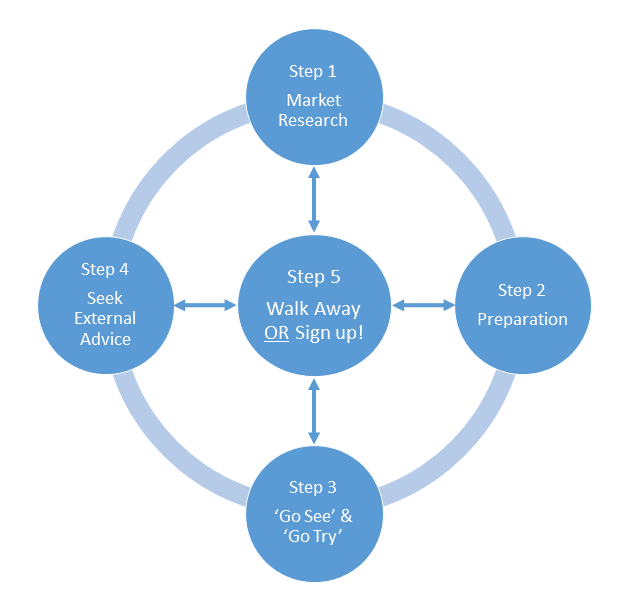
I have prepared a simple 5 step process for anyone considering making an investment in a franchise. This 5 step process is based on my own research, conversations with countless people involved in the industry and my own personal experience. Prospective Franchisees should pick and choose the elements of the 5 step process that work for them and also tailor the DD questions to use with the Franchisor based on what they think are most applicable.
The DD questions I have included are based on the information Franchisors are legally obliged to provide in countries like the US and Australia. Many of the same Franchisors that operate in these jurisdictions also operate in the U.K. and therefore they should have no issue with you asking for this information. The same should be said of any self proclaimed ‘Ethical Franchisor’. If for whatever reason you get some pushback I would seriously consider whether the investment is right for you.
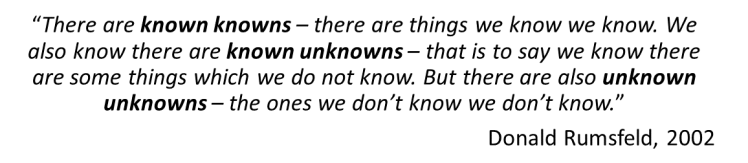
You really want to avoid a situation whereby you end up investing in a franchise with a 5+ year commitment that is performing worse than you expected or has a toxic culture.
The simple 5 step due diligence process, which is intended to be iterative is as follows;
Step 1: Market Research
- Understand the market, the franchise’s positioning within it…etc.
- Understand any headwinds there may be for both the market and the individual franchise. Is it a market that could be disrupted because of advances in technology and if so where would it leave the franchise?
- Are there likely to be any changes to regulations that would add additional costs and put pressure on margins?
- Are there any upcoming political changes, either locally or internationally, that could impact the market e.g. change to tax system, such as employers NI!?
- Is there the possibility of a major ‘event’ with the franchise itself such as a takeover by Private Equity, change of strategy etc.?
- ‘Try before you buy’ by doing your own mystery shopper exercise either by getting an existing franchisee to provide you a quote, if it is a home service, or if it is a retail business go and visit a franchise and try the service yourself and see how the franchisee deals with different situations.
- Review any online complaints by customers on review sites like trustpilot, Google reviews.. etc. to get a feel for what customers think about the service.
- Review any online complaints about the Franchisor by franchisees but we warned that these will be extremely rare because of the use of NDAs to prevent franchisees from saying anything negative publicly (see previous blog re NDAs here)
- Check to see how many franchises are up for sale by looking at online sales sites like https://www.franchisedirect.co.uk, https://www.daltonsbusiness.com, https://uk.businessesforsale.com, https://www.franchiselocal.co.uk etc. This will give an indication of the % of franchises that are up for sale. Some franchisors like my ex Franchisor, Dream Doors have their own website where they list their ‘available opportunities’. Looking at this page on 07/12/24 I can see that there are 41 franchises for sale which is approximately 45% of the total they have, which would certainly ring alarm bells with me if I was considering investing in them.
- If you are still happy to proceed, carefully move to step 2!
Step 2: Preparation
- Use the attached set of sample due diligence questions (link here to PDF), which are based on the disclosure requirements in regulated markets, to prepare your own list of questions for when you meet the Franchisor and any of its Franchisees.
- Review the British Franchise Association‘s (BFA) ‘best practice in franchising’ guide’ (be aware that the content is only advisory for its members) which is contained within the BFA’s Code of Ethics, even if the franchise you are considering is not part of the BFA. The guide (link here) contains some incredibly useful information that should feed into your discussions with the Franchisor.
- If you are still happy to proceed, move to step 3
Step 3: ‘Go See’ and ‘Go Try’
- ‘Go See’ the head office and make sure you meet the Managing Director and other members of the leadership team because it is critical that you see eye to eye with the people you will be investing your life savings with and spending a lot of time with over many years . Bring your list of questions with you or even better send them in advance and really try and get under the skin of the franchise.
- ‘Go See’ some franchisees (you chose who to see rather than relying on Franchisor recommendations) and ask some searching questions about their real life experiences when it comes to financial returns, training and support, culture and values etc. It is important to realise that many Franchise Agreements include clauses that ensure the Franchisee does not say anything negative about the franchise so you will have to ‘read between the lines’.
- Do a full ‘Day in the life’ (or more!) of a franchisee. It’s amazing what you will see and learn from an experience like this. You might even discover that the work involved in running such a franchise is not for you! Best that you discover this now rather than after spending your life savings. Large Franchises such as McDonalds will only onboard people that have been through and passed their extensive onboarding program which takes many months.
- Ask each franchisee you meet the following key question ‘knowing what you know now, would you do it again?’
- After your ‘Go See’ and ‘Day in the life of’, get answers to any questions in writing and at the same time ask the Franchisor to address any concerns you may have.
- After reviewing all the pros and cons, does the benefit of the brand and ready made operating model of the franchise outweigh the additional costs, fees and commissions associated with franchising along with the constraints of a Franchise Agreement? Is it a business that is easily replicable and therefore something you could set up yourself and keep all of the upside?
- Understand your exit strategy and what the terms are for selling the franchise any restrictions that may exist when transferring ownership. You may be able to get some insights from any existing resales, including the price they are selling for.
- If you are still happy to proceed, move to step 4
Step 4: Seek external advice
- No matter how well known or established a franchise is, it is really important that you seek expert legal advice before signing a Franchise Agreement. Unfortunately there are no solicitors (that I am aware of) in the U.K. that focus solely on supporting franchisees and therefore you should use any experienced franchise solicitor, preferably one affiliated with one of the Franchise associations. They may help you get some changes agreed to the Agreement in a so called ‘side letter’ and also ensure that you enter any agreement with your eyes wide open.
- Before signing the Franchise Agreement I would highly recommend that you also take a trusted friend or acquaintance, that you know is willing to challenge you, through your rationale for wanting to invest in the franchise to ensure that you are making an objective decision based on the facts.
- If you are still happy to proceed, move to step 5
Step 5: Walk away or Sign Up!
- If you have any doubts or negative thoughts following your Due Diligence, my advice is to walk away as the stakes involved are way to high
- But if you are still happy to proceed, sign the dotted line and enjoy the ride!
Sample Due Diligence questions
These sample questions are based on the information that Franchisors in regulated markets are required to provide potential franchisees as part of their disclosure process. A link to a PDF document is available here
In closing
This blog is part of a series called ‘The Perils of Franchising’ which, in the absence of any regulation of the industry in the U.K., aims to highlight the many risks involved in investing in a franchise. The next blog in the series is called ‘The Great Franchise Fraud’ which will raise awareness of a huge fraud that happened in my own litigation battle with Dream Doors, part of the Neighbourly (Neighborly) group of franchises, in the hope that others (Franchisors and businesses more widely) can learn from it and avoid the same mistake.
My request to you…
I would love to hear back from anyone connected with the franchise industry about your own experiences with due diligence and whether you would recommend anything different or in addition to my 5 step process.
If you are worried about posting your experiences publicly, please share them with me directly through the contact form and I can then share them anonymously.
Please share this blog with other Franchisees as well as anyone you know that may be thinking of investing in a franchise and ask them to subscribe here for future blogs.
It is worth re-iterating the point that there are many good Franchisors that act in good faith but the focus of this blog is on ‘The Perils of Franchising’ as there is little or no public information available about the real risks involved in investing in a franchise.
Details about the author and his experience of being a Franchisee can be found here. Just to be clear, the authors’ views expressed in this blog are exactly that….his views, based on his personal experiences, by connecting with many current and past franchisees of many different Franchisors and through his own market research.
#theperilsoffranchising #franchise #franchisor #franchisee #franchising #franchiseregulation
Copyright © The Perils of Franchising. All rights reserved.
 The Perils of Franchising
5 comments